
If you’re moving to Western North Carolina from another part of the country, you may hear a term during the home inspection process that isn’t common everywhere: radon.
For many buyers, especially those relocating from areas where radon testing isn’t routine, the topic can sound intimidating at first. The good news is that radon is well understood, easy to test for, and, when necessary, can be effectively managed with a mitigation system.
Here’s what you should know as you navigate the home-buying process in the mountains of Western North Carolina.
What Is Radon?
Radon is a naturally occurring radioactive gas that forms when uranium in soil, rock, and groundwater breaks down over time. It is:
- Colorless
- Odorless
- Tasteless
- Naturally present in varying amounts across the United States
Because radon comes from the ground, it can enter homes through small openings in foundations, crawl spaces, basements, slab floors, and utility penetrations.
Most people would never know radon is present without testing because it cannot be detected by sight, smell, or taste.
Why Is Radon More Common in Western North Carolina?
Western North Carolina’s mountainous geology contains granite and other rock formations that can naturally produce higher levels of radon than many other parts of the country.
That doesn’t mean every home has elevated radon levels. In fact, two neighboring homes can have very different test results. Factors such as:
can all influence indoor radon levels.
This is why testing is recommended regardless of a home’s age, size, or condition.
Why Is Radon Testing Part of Many Home Inspections?
For buyers in Western North Carolina, a radon test is often considered a standard part of due diligence during the inspection period.
A radon test helps answer a simple question:
What is the radon level inside the home today?
The U.S. Environmental Protection Agency (EPA) recommends taking action when radon levels reach or exceed 4.0 picocuries per liter (pCi/L).
A test provides objective information that allows buyers and sellers to make informed decisions, just like evaluations of roofing, HVAC systems, or structural components.
Rather than viewing radon as a deal-breaker, it’s best to think of it as another piece of information about the property.
What Happens If a Home Has Elevated Radon Levels?
If testing reveals elevated radon levels, the solution is often straightforward.
Many homes throughout Western North Carolina have radon mitigation systems installed, and these systems are highly effective at reducing indoor radon concentrations.
In most cases, elevated radon levels can be addressed without major construction or disruption.
What Is a Radon Mitigation System?
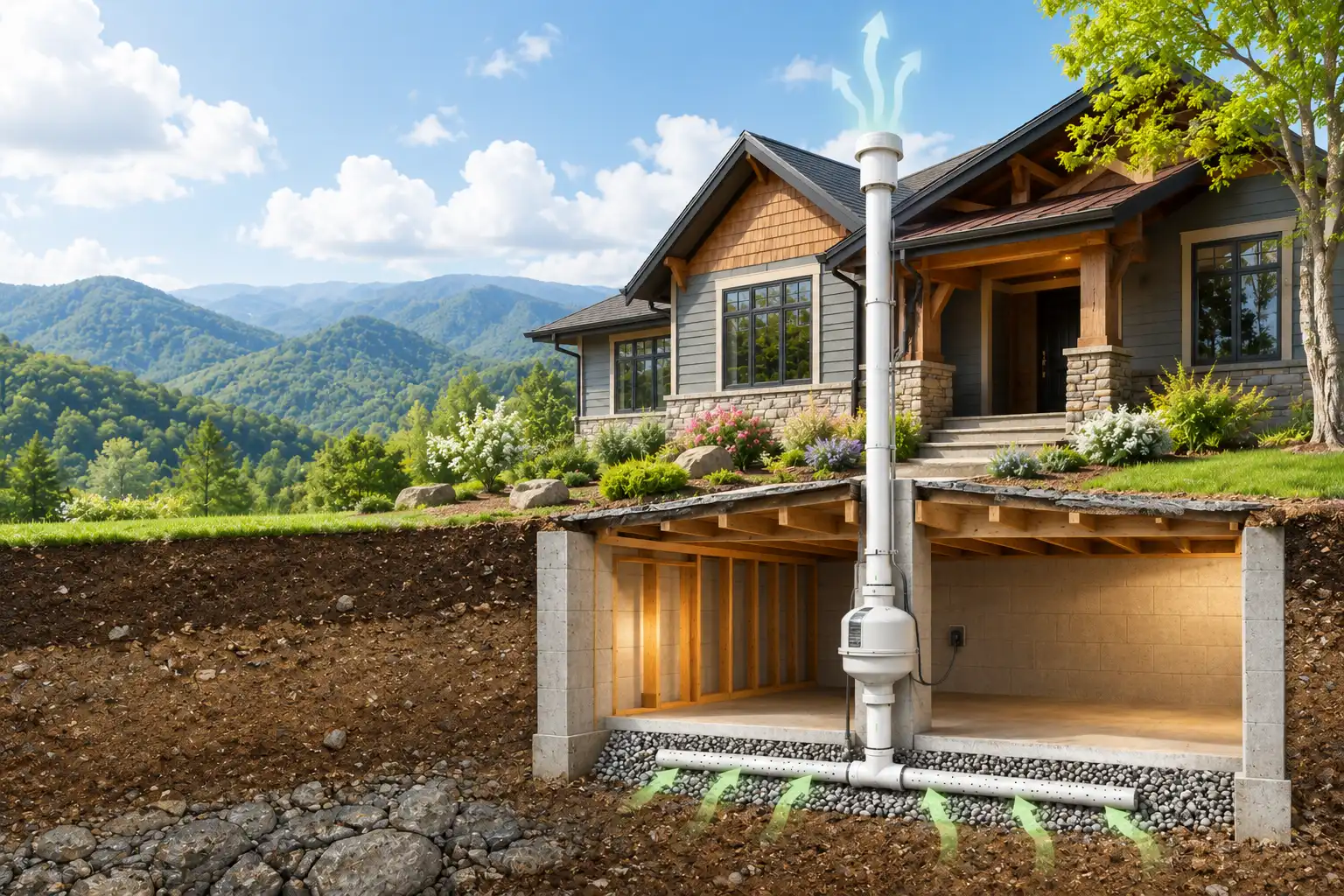
A radon mitigation system is designed to safely redirect radon gas from beneath the home and vent it outside before it can accumulate indoors.
A typical system includes:
- A collection pipe installed beneath the foundation or crawl space
- A specialized fan that creates negative pressure
- Vent piping that carries the gas above the roofline for safe release
Think of it as a ventilation system specifically designed to manage radon.
Once installed, these systems often reduce radon levels significantly and can operate continuously with minimal maintenance.
Should Buyers Be Concerned About a Home With a Mitigation System?
Not necessarily.
In fact, some buyers view an existing mitigation system as a positive feature because:
- The home has already been tested.
- A solution is already in place.
- The system is actively managing radon levels.
- Follow-up testing has often confirmed reduced radon concentrations.
Much like a sump pump in a basement or a dehumidifier in a crawl space, a mitigation system is a tool designed to address a specific environmental condition.
What Should Out-of-State Buyers Know?
If you’re relocating from another region, it’s important to understand that radon testing is very common in Western North Carolina.
Seeing a radon test or mitigation system during a transaction is not unusual and typically isn’t a sign that something is wrong with the property.
Instead, it reflects a proactive approach to understanding and maintaining a home’s indoor environment.
The most important step is simply to gather information through testing and discuss the results with qualified inspectors and mitigation professionals when needed.
The Bottom Line
Radon is a naturally occurring gas found throughout many parts of the United States, including Western North Carolina. Because the region’s geology can contribute to higher radon levels in some homes, testing is often a routine part of the home-buying process.
The key takeaway for buyers is simple: radon is measurable, manageable, and rarely a reason to walk away from an otherwise great home.
With proper testing and, when necessary, a professionally installed mitigation system, buyers can move forward with confidence and make informed decisions about their investment.
Considering a Home Purchase in Western North Carolina?
Whether you’re relocating from out of state or buying locally, understanding inspections, radon testing, and mountain-home considerations can help you make a confident decision. The Varga Mountain Collective team is happy to help you navigate the process and connect you with trusted local professionals when questions arise.
Kelsey Varga
828.335.1530 | kelseyvarga@compass.com
Social Cookies
Social Cookies are used to enable you to share pages and content you find interesting throughout the website through third-party social networking or other websites (including, potentially for advertising purposes related to social networking).