

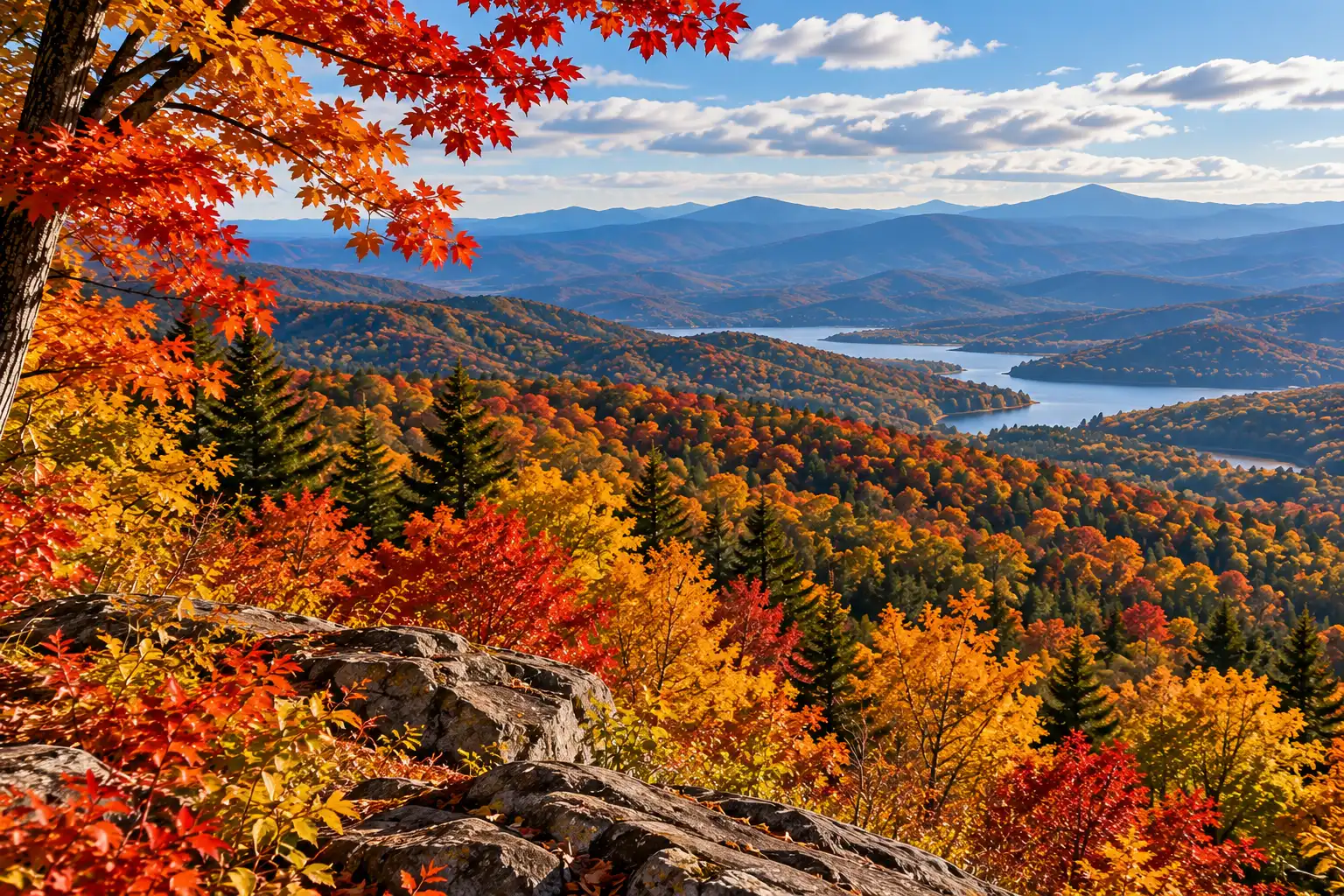
There’s a moment every year in Western North Carolina when you realize fall has arrived.
It isn’t necessarily when the mountains reach peak color. It might be the first morning you need a sweater to walk the dog. The first bag of local apples on the kitchen counter. The first dinner outside when the air is cool enough that nobody wants to leave the patio.
Then you look toward the mountains and notice that the ridgelines have started to change.
Fall in Asheville and Western North Carolina is famous for its foliage, but the leaves are only part of what makes this season so special. Here, autumn unfolds across different elevations, tree species, farms, neighborhoods and mountain towns—creating a season that feels less like a single peak weekend and more like a gradual shift in how we live.
Looking for peak dates, scenic drives and the best places to see the leaves? Read our Western North Carolina Leaf-Peeping Guide.
This time, we’re looking beyond where to see fall and asking a different question:
Why does fall here feel so different in the first place?
Why Western North Carolina Gets So Many Fall Colors
Look across a Western North Carolina mountainside in October and you won’t see one uniform wash of orange.
You’ll see gold beside crimson. Rust beside yellow. Deep burgundy mixed with bright orange, bronze and stubborn pockets of green.
That’s because different trees make fall differently.
As daylight shortens and temperatures cool, trees begin producing less chlorophyll—the pigment responsible for their summer green. As the chlorophyll breaks down, other pigments become visible. Carotenoids and xanthophylls produce many of the yellows and oranges we associate with fall, while anthocyanins are responsible for rich reds and purples.
And different species produce different combinations.
Hickories, birches and cherries tend toward yellow and orange. Maples can turn brilliant red, orange or yellow. Sourwoods and black gums add vivid reds, while oaks bring everything from scarlet to russet and deep bronze.
Western North Carolina happens to have an extraordinary variety of trees growing alongside one another.
That diversity is part of the reason our mountains don’t simply change color. They become a patchwork.
NC State’s guide to the science of fall foliage offers a deeper look at what is actually happening inside the leaves.
In the Mountains, Fall Moves
There’s another reason autumn here lasts longer than you might expect.
Elevation.
Western North Carolina rises from lower foothills and river valleys to some of the highest peaks in the eastern United States. Those elevation changes create different temperatures—and different fall schedules—within relatively short distances.
Color typically begins at the highest elevations and works its way down the mountains.
So while one ridge may already be glowing orange and red, the valley below can still be mostly green. A week later, the balance shifts.
Research summarized by the North Carolina State Climate Office describes a useful rule of thumb: fall color can move downslope roughly 1,000 feet every seven to ten days, although actual timing varies with the year’s weather. That elevation range helps give Western North Carolina a particularly long progression of color.
For locals, that’s one of the pleasures of the season.
We don’t necessarily wake up one Saturday morning to “peak fall.”
We watch it coming.
The Weather Gets a Vote
No two autumns in Western North Carolina look exactly alike.
Even with the same mountains and the same trees, weather affects when leaves turn, how intense their colors become and how long they stay on the branches.
Sunny days and cool—but not freezing—nights are particularly good for vivid color. Cool temperatures help chlorophyll break down, while sunny days encourage sugar production that can contribute to brilliant reds and purples.
Warm fall weather can delay the change. Drought can stress trees and lead to early leaf drop. Extended cloudy or rainy periods can limit some of the brilliant reds, while strong winds can shorten the show by simply taking leaves down early.
That’s why predicting the exact “best weekend” months in advance is always a little risky.
The mountains are running the schedule.
And in 2026, that’s particularly worth remembering. NC State’s current outlook calls for more variation than usual across North Carolina because drought, heat and rainfall have differed significantly from place to place.
But the science only explains what happens to the leaves.
It doesn’t fully explain why so many of us love living here this time of year.
Fall Here Is Something You Participate In
There are places where autumn is mostly visual.
Western North Carolina isn’t one of them.
Fall changes what we eat, where we spend our weekends and how much time we want to be outside.
Windows stay open.
Coffee moves to the porch.
Saturday mornings start at the farmers market.
A free afternoon becomes an excuse for a trail, an orchard or a drive to a neighboring mountain town.
Dinner reservations come with the question, Can we sit outside?
And suddenly the fleece you haven’t thought about since April is back by the door.
The leaves provide the backdrop. The lifestyle is what makes the season memorable.
Apple Season Is Part of the Rhythm
You know fall is close when apples start appearing everywhere.
Henderson County is apple country, and living near Asheville means apple season can become part of your normal fall routine rather than something reserved for a once-a-year vacation.
Some days call for the full orchard experience.
Sky Top Orchard in Flat Rock is a longtime favorite for U-pick apples, mountain scenery and those famous cider doughnuts.
Jeter Mountain Farm Apple Orchard combines U-pick fruit with a farm market, bakery, cider and the kind of big mountain-farm setting that makes it easy to stay longer than planned.
At Stepp’s Hillcrest Orchard, the family’s U-pick tradition dates back decades, while Grandad’s Apples and Justus Orchard offer their own versions of the classic Hendersonville apple-season experience.
Other days, you don’t need the hayride or the afternoon itinerary. You just want a bag of good local apples, cider or a pie to take home.
That’s part of living here, too.
And because different apple varieties ripen at different times, the experience changes as the season goes on.
Farmers Markets Change With the Season, Too
One of the easiest ways to notice the seasons in Western North Carolina is to shop the same farmers market throughout the year.
Summer’s tomatoes, berries and corn gradually make room for apples, winter squash, greens, root vegetables, mushrooms and the ingredients that make you want to cook something slowly on a Sunday afternoon.
In Asheville, Saturday morning might mean North Asheville Tailgate Market or downtown’s Asheville City Market.
During the week, locals can work stops at West Asheville Tailgate Market or River Arts District Farmers Market into an ordinary afternoon.
And WNC Farmers Market on Brevard Road offers a much larger, year-round connection to regional agriculture.
For anyone who wants to go deeper, ASAP’s Local Food Guide is one of our favorite resources for finding farms, markets, restaurants and Appalachian Grown producers throughout the region.
This is one of the things visitors sometimes miss about Asheville’s food culture: the farm-to-table connection isn’t just branding.
Agriculture is all around us.
Then There Are the Patios
There may be no better Asheville weather than a sunny fall afternoon.
The humidity has backed off. The air is crisp. The sun still feels warm. And you know that in another month or two you’ll wish you’d spent more time outside.
So you do.
Lunch stretches a little longer. Happy hour turns into dinner. A rooftop suddenly makes more sense than a dining room.
For a classic Asheville mountain-view experience, Sunset Terrace at the Omni Grove Park Inn looks west across the Blue Ridge.
In Biltmore Village, Corner Kitchen offers a more intimate neighborhood patio, while downtown spots such as Posana Downtown make it easy to pair dinner outside with an evening walking around the city.
And sometimes the best fall plan isn’t a particular restaurant at all.
It’s simply finding somewhere outside, ordering what sounds good and realizing two hours later that nobody has checked the time.
Hiking Gets Better When the Air Gets Cooler
Summer gets plenty of attention for outdoor adventure in Western North Carolina.
But ask people who hike here regularly, and many will tell you that fall is hard to beat.
Cool mornings make longer climbs more comfortable. The forest changes almost every week. As leaves begin to drop, views start opening between the trees.
And hiking doesn’t have to mean planning an all-day expedition.
The North Carolina Arboretum offers miles of trails just outside Asheville and is an easy choice when you want to get outside without devoting the entire day to it.
The French Broad River Greenway makes a walk or bike ride along the river part of everyday Asheville life.
Farther out, DuPont State Recreational Forest, Pisgah National Forest and the Great Smoky Mountains National Park give you thousands upon thousands of acres to explore.
You can also spend a fall afternoon wandering the gardens and grounds at Biltmore or head toward Chimney Rock State Park, checking current access and trail conditions before you go.
The point isn’t to conquer the biggest summit.
Sometimes it’s just that the weather makes being outside feel too good to waste.
The Best Fall Days Usually Aren’t Overplanned
There’s a temptation during leaf season to turn every weekend into an itinerary.
We’d argue for leaving some room.
Start at the farmers market.
Grab coffee.
Pick one trail instead of three.
Stop somewhere because the view looks good.
Buy the apples.
Have lunch outside.
Walk through downtown Hendersonville, Black Mountain, Brevard or Waynesville without needing a list of things to accomplish.
Stay for one more drink because the afternoon is still warm.
Take the slower road home.
That’s often when Western North Carolina feels most like itself.
What Fall Feels Like When You Actually Live Here
Visitors come to Western North Carolina hoping to catch the mountains at exactly the right moment.
When you live here, you get all the moments around it.
You notice one maple on your street turning red before everything else.
You watch the higher ridges change while your neighborhood is still green.
You start keeping a jacket in the car again.
You know which farm stand has the apples you like.
You squeeze in a walk before dinner because daylight is getting shorter.
And eventually the big leaf-peeping weekends pass.
The leaves drop. The views through the trees get wider. Trails become quieter. The mountains shift from brilliant color into the softer browns, grays and deep evergreens of late fall.
There is something nice about that part, too.
Because the real appeal of autumn in Western North Carolina isn’t that we have a few weeks of beautiful leaves.
It’s that an entire season changes the way this place feels.
Fall Is One of the Best Ways to Understand Life in Western North Carolina
We spend a lot of time talking with people who are considering a move to Asheville and the surrounding mountains.
Naturally, the conversation begins with homes.
But choosing to live here is rarely just a real estate decision.
It’s also a decision about what you want Saturday morning to look like. How close you want to be to a trail. Whether you’d rather have a downtown sidewalk or a long-range mountain view outside your front door. Whether access to farms, restaurants, art, small towns and the outdoors matters in your everyday life.
Fall has a way of bringing all of those things together.
The mountains are beautiful, yes.
But the real luxury is having the time and proximity to enjoy them when there isn’t an itinerary at all.
At Varga Mountain Collective, that’s the side of Western North Carolina real estate we love helping people understand: not simply which home works, but which version of life here feels like yours.
If you’re considering making Asheville or Western North Carolina home, we’d love to help you explore the communities—and the lifestyle—that come with it. Give us a call!
Social Cookies
Social Cookies are used to enable you to share pages and content you find interesting throughout the website through third-party social networking or other websites (including, potentially for advertising purposes related to social networking).